Saturday, February 28, 2015

Our Project Article in 'The Conversation'

Kingsgate’s Thai mine a lesson in failed community management


In mid January, the Thai Government’s Department of Primary Industries and Mines ordered the 30-day suspension of activities of Akara Resources, a Thai gold mining subsidiary of Australia’s Kingsgate Consolidated Limited.
The suspension followed a protracted dispute between Akara and local villagers. The locals claimed – and this was voiced predominantly by women – they had been adversely affected by the mine’s activities.
Despite the concerns raised by villagers, Akara continued to issue environmental impact studies that failed to address the concerns.
But when the Thai government assessed the mine’s impacts on the environment and health, arsenic and manganese were found to exceed acceptable levels in 282 villagers living near Kingsgate’s Chatree gold mine in Pijit Province.
Kingsgate responded by arguing that “arsenic and manganese are not used or stored at the Chatree Mining operation now or at any time in its history". Indeed, it is cyanide rather than arsenic or manganese which is used to leach gold from ore.
Following a public hearing of key community stakeholders in February, the Department of Primary Industries and Mines announced it would lift the suspension order if Akara Resources were to prove its operations do not pose a threat to health. Apparently this did not happen to the government’s satisfaction, as an additional 45 days suspension has been applied.
How could things have gone so wrong?

Wednesday, February 11, 2015

Mining and Development: Story from our fieldwork in Pijit (Part 2)

In the previous post, we examined a few photographs from the mining community in Pijit. We presented different pictures of relationship among key stakeholders in the community. We also argue that, since social environment plays a critical role in corporate survival, Akara (mining MNC in Thailand) need to satisfy (and sometimes even exceed) their stakeholders' expectations. We also address that mining MNC's success and community prosperity are intertwined. We need to present another three photographs from the field to confirm our arguments on the current situation in Thailand.

                                                 
                                                      Picture 1: Sewing Group

Like most mining MNCs in developing countries, Akara contribute to various income generation schemes in the host community. This is the picture from the sewing group which members are predominantly women. The project sounds interesting from the economic empowerment perspectives. When we discussed how this scheme change life of the members, some women obviously mentioned benefits from stable incomes from sewing. The decision-making of Akara to create the sewing group  is connected to economic empowerment in the community. In our opinion, this little sample is significant because the company include views and ideas from women from various groups and backgrounds prior to the establishment of this program. Mining MNCs need to understand the fundamental needs of the community, from the community perspectives, not the company's perspectives.

                                                     Picture 2: Road to the Mining Area

One of the strongest claims from the villagers in this study is concerns on noise and water pollution. While we were listening to stories from the villagers, we frequently heard the noise from the production and trucks from the production site. The company used to operate 24 hours!! After several attempts from the local villagers to bring this case to the authority, the company stopped the night operation. In terms of air and water pollution, since we look at the gender perspectives from this study, we found women tend to worry about this issue more than their male counterparts. Men from the villages tend to focus on how to 'earn a living'. Most women whose husbands work for the company stay home and look after their families.


                                              Pictures 3 and 4: The Way Women Lead

We traveled to Moo 9 (the picture of the road) and met with the lady in a picture, Khun Suekanya. Her picture is not from my camera but it was taken by the media on the public hearing day on 11 February 2015.  She is one of the leaders who campaigned against the company. Again, we are trying to focus on gender issues here so we learn from the interviews that most people who protest against Akara's issue on environmental impacts are women. Women are encouraged to deal with the movement and the political aspects of mining industry. Most women mentioned their roles as the carer for the next generation, protectors of the community, and the guardian. Interestingly, they admitted that level of violence can be different when women campaigned against the company. Men tend to end up with violent attack if they stood up and protested.

I would like to finish this post by a news report from Thai PBS on the actions from the community and the government on this important issue.


Saturday, February 7, 2015

Extension of Akara closure looking likely : Report from Bangkok Post


Akara Resources Plc's gold mine in Phichit province may be closed longer after the company's appeal against the government's suspension order was turned down.  

The government has asked the company to provide more information and plans to hold a week-long public hearing for villagers living near the mine, signaling that the mining operation might face further suspension.


"But Akara reiterated that the toxic metals found in the blood tests were caused not by the mining operation but by the villagers' use of insecticides on their own farmland" 

Credit and read more at: http://www.bangkokpost.com/business/news/461993/extension-of-akara-closure-looking-likely. 

Friday, February 6, 2015

Mining and Development: Story from our fieldwork in Pijit (Part 1)

With the order from Thai authorities to suspense an Australian gold mine in the north of Thailand, this causes a number of concerns from the community and industrial perspectives. Issues on health risks and political influence were reported in the Thai media. This is truly one of the critical issues of mining and development in Thailand.

Our project deals directly with mining community in Tab Klor, Pijit, the location for Akara resources. We have been working closely with the community and we talked  to stakeholders from the villages and industry. We, therefore, need to share some reflections from the field as part of our research project.

Our team visited Pijit in October-November 2014. After the publicity in regards to the situation in Pijit, we look at our research evidences and would like to share some 'photos' and 'stories' from the research fieldwork. Note that our project is not politically involving with any parties. We are interested in gender aspect of mining and mining MNCs in Pijit and Petchaboon. Hence, we like to tell our story from the picture (as key evidence) we collected from the fieldwork in November 2014.


                                                         Picture 1: The Village

The community comprises approximately 13 villages. Most of them are not as rural as one may imagine. Roads link all villages very well and it takes approximately 20 minutes to the main road that links this mining community to Pijit and Petchaboon. A few villages that are close to the company have been receiving the village funds (approx. 1 million bath per year per village) to manage their own needs. However, issues on fairness (as mentioned from further villages) have been one of the major concerns in the community. We have learnt two completely different ideas: development or detrimental from various groups in different villages. Obviously, infrastructure has been developed here and we can find the relationship with mining industry. However, some societal issues are raised by some villagers.


                                           Picture 2: Public Board from the Company

One aspect that has been done professionally from the company is public communication. In all villages where we visited and observed, we noticed this similar public board in the centre of the village. You may question the purposes of this board. Obviously, the communication and public relations aspects are outstanding. Akara uses this space to communicate with all villages,distribute their magazine, discussing benefit they have raised to the community, promotion of their sponsorship for the Buddhist temple or school, other health and finance issues etc. From the communication perspectives, this is one of best strategies to inform the community. However, some concerns from the villagers include the type and quality of information, opportuities to use this space beyond PR activities, and other essential information that can be promoted in the community.


                                                   Picture 3: Head of the Villages

Heads of all villages play significant roles in the mining community. They liaise with the governor, mining MNC and the villagers. We visited five heads of the village and had wonderful conversation regarding the history of mining community and gender issues. All village heads agree that the industry was historically designed for most men. However, women can now play different roles in the mining community. Most of them also agreed that the repatriation of women and men from Bangkok to Tab Klor is one of the major contributions of the industry. Women can do more work at home and at work. They can return to the hometown and live with their parents/family.

Village heads can also play various political roles in the community. They are the economic and political mechanisms for mining MNCs, the Government and villagers. Their relationship with various groups in the community is incredibly powerful.

Sunday, January 25, 2015

The consequences of Mining

What are the consequences of mining in the global and local communities? When we started this project we asked ourselves this broad question and we hope that we will find some interesting facts to learn from the project.  At this stage, we have seen and witnessed various societal and community factors.  It is. Not the intention to discuss all of them here. We would like to share some points while we are analyzing the data.


The primary influence is on economic development which is prominent in all communities we explored in this project. Economic contributions come in many forms such as tax, job creation, microfinance, working with local suppliers, and improvement of basic infrastructure in the local areas. 

In Laos, for instance, most women are employed in various sectors and departments in the mining industry. Economic impacts last in the community and seem to have various impacts on the community. Status of women in the community can also be changed because of the economic empowerment. Roles they play in the community have recently changed from the receipients of income to the contributors to family's well-being.


An interesting issues also include fairness in employment and equity in the workplace. Although women have been employed by mining companies, some complained about (lack of) opportunities to participate in the recruitment and selection process. Having their voices reflected in the public arena is important and they hope to be more proactive in the community in this regard.

Thursday, January 22, 2015

Thailand shuts down Australian gold mine over health fears


"We are calling for a speedy resolution as there are 1100 jobs at the mine which are in jeopardy.Loss of these jobs would have adverse flow on effects to the local communities." : Kingsgate Executive Chairman Ross Smyth-Kirk.
I found this news is fascinating since this is the area where we conducted our field research in Thailand an we spent time with the community and the company. I hope they find the best solutions for this situation real soon.

Bangkok: Thai authorities have ordered the suspension for 30 days of an Australian gold mine in northern Thailand amid concerns over the health of thousands of villagers living nearby.
Random urine and blood tests showed above-standard arsenic and manganese levels in villagers near

Kingsgate Consolidated's Chatree gold mine 280 kilometres north of Bangkok, according to Porntip Rojanasunan, director-general of the Justice Ministry's Central Institute of Forensic Science.
An order from the institute says "we are of the opinion the mining might have affected the health of villagers."

It says the purpose of the suspension "is to determine whether the health hazards were caused by the company's operation."

Thai media reported mine managers have told its 1,100 employees and stopped operation.
The mine is operated by Akara Resources Public Company, a subsidiary of Sydney-based Kingsgate Consolidated.

In a statement, Kingsgate Executive Chairman Ross Smyth-Kirk said the company was stunned by the sanction. It has hired toxicology experts to carry out a study on the causes of any elevated test results.

"We are shocked and amazed at the temporary suspension order at the Chatree Mining Complex, situated in central Thailand which is internationally recognised as one of the safest gold mines in the world," Mr Smyth-Kirk said.

"It is important to note that arsenic and manganese are not used or stored at the Chatree Mining operation now or at any time in its history.

"We are calling for a speedy resolution as there are 1100 jobs at the mine which are in jeopardy.Loss of these jobs would have adverse flow on effects to the local communities."

Chatree is Thailand's first and largest gold mine that commenced operations in 2001, producing more than 1.3 million ounces of gold and more than 5.8 million ounces of silver as at June 2013.
Akara recorded revenues of $233 million and profit of $59 million in the fiscal year ended June 2013.


Kingsgate Consolidated claims on its website it has an "outstanding occupational and health record coupled with stringent environmental controls that help underpin the existing operations."
But the mine has faced complaints and law suits filed by communities and villager groups in the past, mainly related to claims about the environment and health.
In December the Central Institute of Forensic Science said that as many as 6,000 people living near the mine may have heavy metals in their blood, the Bangkok Post reported.


Tests found manganese and arsenic in 329 of 600 blood samples collected from local livings in Thap Khlo district near the mine, the institute said.

"The results are very worrying," Ms Porntip said at the time.
Akara Resources said in December the company had co-operated with the institute while carrying out its tests.

"We are pleased to meet with Khunying Porntip as we believe she will conduct proper testing," Akjara chief executive Pakorn Sukhum said before the tests were carried out.
Mr Pakorn maintained the company operates to the best international practices in health and environmental standards.

"The fact that Chatree continues to be allowed to operate shows that we adhere to required standards and regulations," he said at the time.
Akara Resources said in December that the most recent blood and urine tests it carried out in June 2014 for 800 Akara and sub-contractor workers showed arsenic and manganese levels within normal limits.


Source: http://www.smh.com.au/business/mining-and-resources/thailand-shuts-down-australian-gold-mine-over-health-fears-20150114-12nrfd.html#ixzz3PXVd1GUh

Tuesday, January 13, 2015

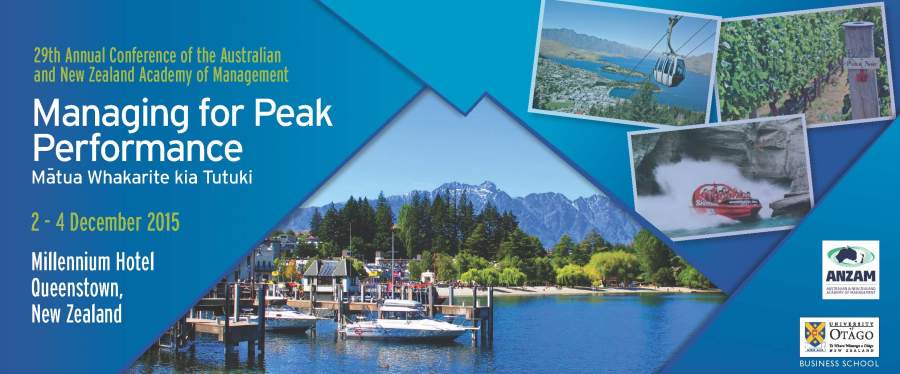
Australia and New Zealand Academy of Management Conference

The Australian and New Zealand Academy of Management (ANZAM) was founded in 1985 to advance management education, research, and practice in Australia, New Zealand, and beyond.  ANZAM is the primary professional body for management educators, researchers and practitioners in Australia and New Zealand, with about 600 individual members and 50 institutional members (representing most Australian and New Zealand universities) as well as members from other countries.

ANZAM offers Professional and Associate Membership to individuals who are management educators, researchers or practitioners, and Institutional Membership to tertiary providers of management education and research.
The 2014 ANZAM conference is the latest forum where we disseminated our project on mining and gender equity in Lao PDR and Thailand. Our team presented two papers from the project. The main paper entitled "How Mining MNCs promote Gender Equity: Modus Operandi?" focuses on gender-related CSR strategies from mining companies in this study as well as the impacts of international mining industry on women, family, community, and the locals. 

                                                   With keynote speaker, Bob Carr

The presentation was well attended by academicians and researchers in international business, sustainability and development.  The key questions after the presentation include:
1) What will be the key strategies for mining MNCs to promote women?
2) Why MNCs need to focus on equity?
3) What are the roles of local governments in the research process?
4) What I am interested to do after this phase of the project? Why?

These questions are relevant to what we are doing and what we plan to achieve. Since we are approaching the final stage of this project, we hope that we can proceed to the analysis of the project and ways to transfer findings from this project into policies and meaningful practices.